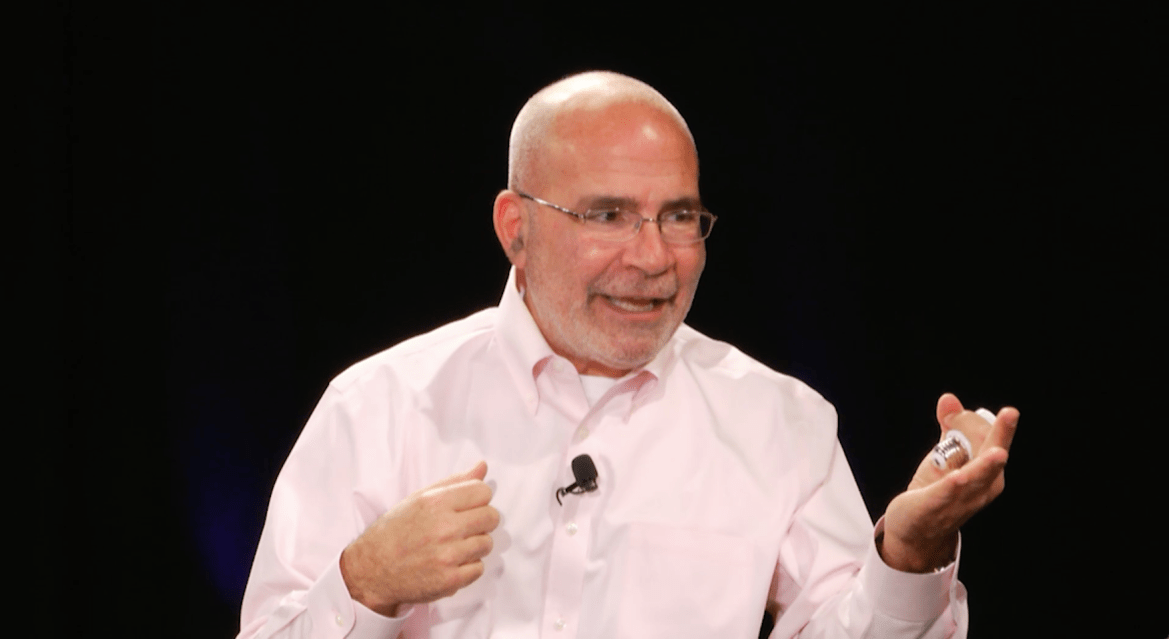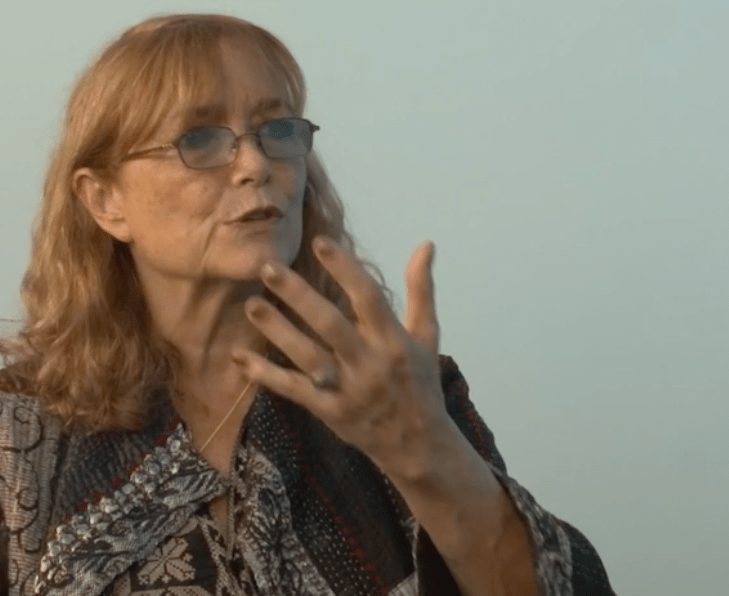
Technology, innovation and love is the theme of Love Hacking, a documentary by filmmaker Jenni Nelson.
How do you find love in 21stc? Forget the old fashioned matchmaker or blind dates to find a partner in today’s world dominated by Internet, email, chat and Skype. These are the same tools that Silicon Valley-based Tim Heath uses to find the girl of his dream thousands of miles away in the far away Himalayan country of Nepal. Tim courts the girl of his dreams virtually, proposes to her virtually and then makes a trip from Silicon Valley to Nepal to marry her.
In this interview Jenni takes us behind the scenes and shares how she discovered Tim’s story and how the film was made. A Stanford graduate, Jenni used an innovative route herself to make the film. She raised money via Kickstarter and completed the project.
“Love Hacking,” was shown at the 2nd Palo Alto International Film Festival in September 2012.
Filmmakers Ritu Sarin and Tenzing Sonam’s When Hari Got Married is a delightful documentary film. Hari is a chatty and friendly cab driver, who lives in the Himalayan town of Dharmsala, home of the Dalai Lama. And right from the opening shot and the opening dialog Hari draws you into his world, and provides a running commentary about love, life, modernization and Indian political in a mixture of Hindi and English. You’ll notice an air of excitement about Hari. He and his family are in the middle of his wedding preparation and we get to see the entire process that culminates in a grand wedding ceremony. By the end of the film, we get to meet Hari’s bride, who was an unseen and central element in this narrative.
Listen to the opening dialog.
“Anu? Good Morning.I love you.”Hari coos sweet nothings into his mobile phone to his bride-to-be as he drives his van through the streets of Dharmsala ferrying his passengers.” And get this. He has met her precisely for 2 seconds. They have been engaged for nearly 2 years. Through some shrewd detective work on his part he gets his fiance’s mobile number and thus begins his mobile courtship. Their long distance relationship starts tentatively and after a few months it gets to a comfortable point where he banters with her and keeps repeating “I love you,” and gently and happily badgers her to respond. This is an arranged marriage with a modern twist made possible by that ubiquitous mobile phone, which is a must-have device for most young Indians.
Since Dharmsala draws a lot of international visitors, Hari gets to meet people from all over the world. All foreign nuns go in his cab as he puts it. All this international exposure one suspects molds his thinking to some extent. What is different about Hari is his weltershaung, which is refreshingly modern and practical. For example, the reason he is getting married is to make his father happy. He is very clear that he will not take any dowry from her.
When Hari Got Married is an interesting film that captures a changing India, and the changing role, behavior and attitude of young Indians who don’t live in large metropolitan areas. “This age is rat race for money,” as Hari puts it . The film also underscores the central and transformational role that mobile phones play in people’s life in India. Consider this. If Hari had lived in the 1990s he would not have had a mobile phone and nor could he have courted his fiance. “Love in the time of the mobile phone,” is an apt tagline that the filmmakers picked for their film.
You can catch When Harried Got Married at San Francisco’s CAAM Festival at New People, 16th March and 24th March.
San Francisco bay area folks are in for a wonderful cultural treat of films, music and food att this s year’s Asian American Film Festival. The 10 day long festival starts today -March 14th and continues till March 24th, 2013. Films, music and foods are the 3 strands that bind the various Asian-American communities across the US, and that is the theme for this year’s festival. The name of the festival has changed to CAAM that stands for Center For Asian Media.
The festival’s opening night gala event is at the Asian Art Museum on March 14th. Linsanity is the opening night film. SF bay area filmmaker Evan Jackson Leong looks at the rise of the Asian American basketball sensation Jeremy Lin in this film. Like many filmmakers Leong turned to Kickstarter to raise money to make this sports documentary on the Asian American phenomenon Lin.
This year’s festival highlights quite a few South Asian filmmakers, musicians and culinary alchemists.
On March 17th you can catch a double feature at the Castro theatre by two well-known filmmakers of South Asian origin – Mira Nair and Deepa Mehta. Both their films are based on well-known authors of South Asian origin.
Mira Nair’s Reluctant Fundamentalist will show at the Castro at 12 noon on March 17th. The film stars Kiefer Sutherland, Riz Ahmed, Kate Hudson, Liev Schreiber and Shabana Azmi. It is based on a novel by Mohsin Ahmed by the same name.
Deepa Mehta’s Midnight’s Children will show at the Castro Theatre on March 17th at 6 pm.Satya Bhaba, who plays Saleem and Samrat Chakravarti, who plays Wee Willie Winkie will be at the screening of the film that is based onSalman Rushdie’s novel by the same name.
And then there is that superfun foodie film Dosa Hunt by Amrit Singh. Yes, you guessed it right. This is a crazy hunt to track down the best dosa in New York. Well, that might sound a tad boring. But wait till you see how this film is spiced up. There is a disco-themed van, where a bunch of musicians share their deep, deep culinary thoughts about finding the best dosa in New York city and they rank dosas according to their own system of Bobby Jindals. What? Bobby Jindal? Well, you have to watch the film to figure out their dosa rating system with a desi twist. Check out the musicians in this group. You have jazz musician Vijay Iyer or “Vijay uncle” as he put its and he is joined by Anand Wilder of YeaSayer, Rostam Batmangli of Vampire Weekend, Himesh Sarin and Ashok Kondabolu of Das Racist (now defunct), Alan Palomo of Neon Indian and Amrit Singh of Stereogum.
There are 2 documentary films from India. Invoking Justice by Deepa Dhanraj looks at muslim women in Tamil Nadu, and the role of the first-ever-Women”s Jamaat that addresses the issues of women rights. The film will show at Kabuki on March 16th 2013 at 1 pm.
When Hari Got Married is an interesting documentary that features a garrulous cab driver, who has a running commentary about the socio-economic changes in his town of Dharmasala, hometown of the Dalai Lama. Ritu Sarin and Tenzing Sonam are the producers of this fascinating film where Hari, the cabdriver has a free flowing discussion about the changes in India, his family and how he is preparing for his upcoming wedding. What is fascinating to see unfold is even though this is a traditional arranged marriage, Hari courts his bride-to-be in a very “filmi” way complete with those 3 famous words “I love you.” And guess how he does it? All through that ubiquitous device – the mobile phone.
Besides the films and music performances there are a bunch of culinary programs including one on how to create your own Masala.
Midnight’s Children was the closing night film at the recent Cinequest Film Festival in San Jose. Director Deepa Mehta’sMidnight’s Children is based on Salman Rushdie’s novel by the same namee. Published in 1981 Rushdie won a Booker Prize for this book. He wrote the screenplay and is an executive producer of the film.
Salman Rushdie won the Maverick Spirit Award at the festival. He sat down to talk about The Satanic Verses, Midnight’s Children, his autobiography and the film after the screening. Will have more about that in a later post and video.
I was looking forward to watching the film as were the rest of the crowd at California Theatre in San Jose. In a way my mind was a tabula rasa since I never got around to reading the book. I did make some weak attempts to read the book many years ago, but did not succeed. I had no idea about the story line nor the actors in the film. I had deliberately kept it that way. I almost watched the film in Bangalore a couple of months ago, but guess fate had other plans for me? Was I mysteriously handcuffed to watching Midnight’s Children in Silicon Valley? Was that the plan? Midnight’s Children released in Bangalore when I was visiting the city. The film got mixed response from what I could gather via word of mouth publicity. And before I could make go to the nearest picture hall in Bangalore the movie was no longer playing. So, here I was on the closing night of San Jose’s Cinequest Film Festival and waiting for the picture to unfold on the big silver screen.
I enjoyed watching the film as did others in the theatre judging by the reception the film got when the curtain came down. ”This is a saga,” is how a member of the audience described the film. And saga is a good way to describe this film that spans about 60 years of turbulent political-social history of the Indian sub-continent that saw the end of British rule and the birth of 3 new countries: India, Pakistan and Bangaldesh. The narrative begins in 1915 in Kashmir during British India and ends in the 1970s in Bombay, India. The central character in the narrative is Saleem Sinai (Satya Bhaba), who is born at the same time that India and Pakistan became independent nations and therein lies a complex tale of betrayal, fate, love and sadness.
We are doing a ”Women Achievers Special” for the month of March and continue with it for the rest of the year. We will be highlighting women from different walks of life from the ordinary to the extraordinary and listen to their stories of how they did what they did and how they continue to do it.
Our first interview is with Usha Raghunathan, who is in her 70′s now and is going strong. She learnt to fly as a young woman, which was rather unusual way back in the 1950s. She is the first woman to get a pilot’s license in South India as she puts it. She then went on to do do a number of things before becoming an entrepreneur. She runs Ushas, a boutique store that specializes in selling traditional silk sarees in Chennai, formerly known as Madras. You can listen to an extended audio interview with Usha talking about how she learnt to fly in that 1930s Tiger Moth plane.
And from our archives, meet Lakshmi, who works as a maid in Bangalore. A high school graduate she is the mother of 2 boys, and is focussed on educating them. When we did the interview with her she was in the middle of trying to get her personal life sorted out. Now, she is single and trying to make ends meet with the help of her parents and brothers. In this video interview that is in Telugu, Lakshmi talks about how she uses her cell phone. That cell phone has become a source of emotional support and a digital umblical cord to her family that lives in another town near Bangalore. Interestingly, the phone is a gift from her older brother, who gave it to her as a way for the family to stay in touch with her.
At yesterday’s 85th Academy Awards Ang Lee won an academy award for directing his first 3D film Life of Pi based on a novel by Yann Martel. The film went on to win a total of 4 Oscars including for Best Cinematography,Original Score and Visual Effects. This is Mr. Lee’s second academy award. He won his first academy award for directing Brokeback Mountain.
I got to interview Mr. Lee in October 2012 just before the release of Life of Pi. We spoke about how he selected Suraj Sharma, when he saw his first real tiger, India,Ingmar Bergman and food. Yes, Mr. Lee loves to cook. He often makes batches of wontons for his family and leaves them in the freezer when he is away on a long filming schedule as per this New York Times article.
Kamla: Pi is an irrational number that cannot be expressed exactly as a ratio… Did you look for symbolism in the kinds of people you chose, King was your main model for Richard Parker and Suraj became Pi? (I was thinking of the symbolism of Suraj’s name, it means Sun in Hindi/Sanskrit and King, who became the role model for Richard Parker, the tiger.)
Ang Lee: Every element you find is a gift. If they work, it’s a gift. You see it and know. You thank the Lord for giving you that. Well Suraj, I got drawn to him in a weird way. I went through 3000 kids in India and found Suraj. We narrowed down to 12 of them after 3 rounds. Each round, Suraj was, an after thought He wears those goofy glasses so maybe Pi can be a bookworm.I finally got to meet him in Bombay. I said, “Take of your glass.” There I see Pi…its totally compelling, soulful face, the eyes..that’s the kid. Thank God we gonna make the movie.
King, I first saw him also on video tape … he seems to have a bad temper, he doesn’t respect you. That’s the Richard Parker I need to symbolize God, nature, he doesn’t go where you want him to go…the look of him..the angry look is best to portray Richard Parker. He shows no respect, he demand respect -has a lot of dignity. He doesn’t please you in any (which) way. I think that’s the way it should be.
Kamla: When did you ever see your first Bengal Tiger?
Ang Lee: I’ve seen tigers in a zoo, in a show. Before this movie I couldn’t tell a Bengal, Malay tigers, or Siberian or Chinese, Northeastern Tiger. But now I can. I think most tigers are Bengals these days but I’ve never seen them in the wild.
It’s that time of year again in Silicon Valley when technology and films come together at the Cinequest FilmFestival. The festival has a segment that highlights the creative and innovative spirit of Silicon Valley through on how technology is shaping films.
The 23rd Cinquest film festival opens on 26th February and will feature Ginger and Rosaon the first day. This is a coming-of-age film set in 1960s England and directed by Sally Potter. Deepa Mehta’s Midnight Children is the closing night film. Midnight’s Children is based on a novel by Salman Rushdie, who will be at the festival to receive Maverick Spirit Award.
Perhaps one of the biggest crowd pullers of the event will be o March 3rd when actor Harrison Ford will receive the Maverick Spirit award. This event will be held at the historic art deco California theatre in downtown San Jose.
Nearly 200 films from all over the world will be shown at the festival. There is something for everybody and you can take your pick from classics to new films, shorts and documentaries like Lawrence of Arabia, Taxi Driver and Emperor. And then there talks that address the intersection of technology and creativity.In today’s always-on, networked world with multiple access points, social media has come to play a key role in getting for artists and filmmakers. The workshop on Social Media work for artists addresses this question.
Here’s an interesting highlight of things to do and see at this year’s Cinequest festival by The Mercury News. And check out the festival’s calendar for a detailed list of films, talks and other events and how to buy tickets for the festival..
Y’all saw the 55th Grammy awards this year right? Remember We Are Young from Fun? They went on to win to the song of the year Grammy award. Turns out the producer of Fun’s album is Jeff Bhasker. Name ring a bell? Perhaps not because Bhasker generally likes to keep a low-profile and sits huddled in his studio creating “Urban Music” as he put it in this interview. He maybe low-keyed, but Bhasker is on Twitter like the rest of us.
This month’s GQ has a profile of Bhasker with a rather apt title “The Man Behind Fun: Meet Jeff Bhasker, the Most In-Demand Grammy Winning Producer, You’ve Never Heard Of.” That’s right, we the hoi polloi may not be familiar with Bhasker’s name, but he certainly is a well-known person within the music circle in New York and LA. All you have to is look at the people he’s worked with and in a flash you will know it reads like a list of Whos’ Who of the the music industry.
Over the past few years Bhasker has made for himself as a songwriter and producer. “I’m always looking to work with the best people period regardless of genre,” Bhasker told in this interview The Source. And he has worked with some of the best musicians from hip-hop to good old rock n’ roll. Kanye West, Beyonce, Alicia Keyes, Bruno Mars, Rolling Stones, and of course, Fun are just a few names from his enviable roster.
Bhasker pays a lot of attention to how music should sound and hangs out with the artist he is collaborating quite a bit. Creating an emotional connect through his music is central to his creativity process. He spends time “vibing” with the artist and gets to know them, which helps in creating that emotional connectivity and context that he is looking for. Music for him is “about capturing excitement, passion, or emotion on a record,” as he said in an interview with ArtsDirect.
Bhasker grew up in Socorro, a small town in New Mexico, where his dad is a physician and the mayor of the town for over 20 years. He discovered and got hooked to music as a kid of 4-5 years old. Growing up he listened to a wide-range of music and eventually pursued a music degree at Berklee College of Music. (Jazz musician Rudresh Mahanthappa is an alum of Berklee.)
Reading about Jeff Bhasker reminds me of another talented producer and composer, who changed the face of 20thc music – Ahmet Ertegun of Atlantic Records. Ertegun, the legendary producer worked with gospel, blues, soul, jazz, and rock n’ roll artists from Ray Charles, Aretha Franklin, Crosby, Still and Nash to Led Zeppelin and Rolling Stones. And it was some of these famous artists from Ertegun’s Atlantic Records who helped shape Bhasker’s music way out in New Mexico. And like Ertegun – Bhaskar is working with musicians from different genres and helping make that emotional connect for a new generation in the 21st c.
Wonder how Bhasker will influence the music scene in the 21stc with his mix of “urban sound,” jazz and goth music. I read somewhere that in his new avatar as Billy Kraven he wants to mix it all up and serve it a new record. I bet that new record of Billy Kraven will make for an interesting listening experience.
Here’s a video of Bhasker talking about his childhood and how he discovered music.
Sometime last year The Kamla Show’s YouTube channel crossed a million views. A big thank you to all who watched and subscribe to our channel. We appreciate your support and encouragement.
And, if you have not subscribed to our YouTube channel here is how you can do – simply click on the subscribe button in the widget below and viola! you will receive our weekly video interview.
We have over 250 video interviews that you can explore on our channel right from local San Francisco film makers to entrepreneurs and New York cab drivers talking about Bollywood and the only American eating place in Bangalore that’s been around since the 1960s. Go ahead and take a look.
As always, we look forward to your suggestions and feedback.